

Introduction
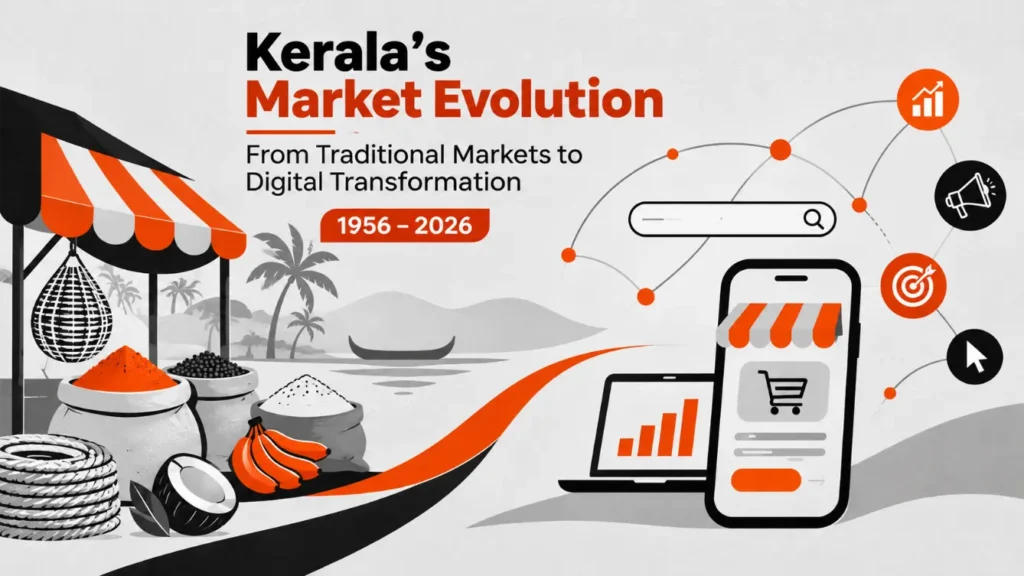
Kerala’s economic journey is not just a story of development. It is a story of how people produce, trade, purchase and do business. Since the formation of Kerala on 1 November 1956, the state’s marketplace has undergone remarkable changes. What once depended on village markets, agricultural trade and traditional shops has gradually developed into a connected ecosystem of supermarkets, shopping malls, e-commerce platforms and digital businesses.
For decades, Kerala’s economy was closely associated with agriculture, spices, coconut, rubber, cashew and traditional industries. Over time, land reforms, cooperative movements, international migration, education, tourism and technological development changed the way its economy functioned.
The arrival of the internet and smartphones introduced another major shift. Businesses were no longer limited to physical locations or traditional advertising. Search engines, social media, online marketplaces and digital advertising created new opportunities to reach customers.
Understanding this transformation helps explain how Kerala became a market where traditional business practices and modern digital strategies operate together.
1. Traditional Markets and Kerala’s Early Economy (1956–1970s)
When Kerala was formed in 1956, its economy was largely dependent on agriculture, fishing, plantations and small-scale industries. Markets were primarily physical spaces where farmers, traders and consumers interacted directly.
Village chandas, weekly markets and town bazaars played an important role in everyday commerce. Farmers brought agricultural products such as paddy, coconut, rubber, cardamom, pepper and cashew to these markets. Traders purchased, distributed and transported these products to other regions.
Kerala’s agricultural identity also supported traditional industries such as coir manufacturing, handloom weaving, handicrafts and cashew processing. Mattancherry in Kochi became an important trading centre for spices and other commodities.

The role of land reforms and cooperatives
The land reforms introduced during the 1960s and 1970s changed agricultural ownership and strengthened the position of small farmers. At the same time, cooperative institutions helped producers organise their activities, improve distribution and access wider markets.
Organisations such as MILMA demonstrated how collective business models could connect rural producers with urban consumers.
During this period, shopping was largely relationship-driven. Customers depended on familiar shopkeepers, personal recommendations and the availability of products in nearby markets.
2. Economic Transformation and the Influence of Gulf Migration (1970s–1990s)
One of the most significant developments in Kerala’s economic history was international migration, particularly to Gulf countries.
From the 1970s onwards, thousands of Keralites travelled abroad for employment. Their remittances gradually influenced household incomes, consumption patterns, housing and local business development.
The Kerala Migration Survey 2023 recorded that remittances increased from approximately ₹85,092 crore in 2018 to ₹2,16,893 crore in 2023.
This growing purchasing power influenced demand for consumer goods, electronics, automobiles, clothing, construction materials and improved retail services.
The growth of the service economy
Education, healthcare, tourism, banking, hospitality and information technology gradually became important economic sectors.
Technopark, established in Thiruvananthapuram in 1990, represented an important step towards Kerala’s emerging technology economy.
The marketplace was no longer driven exclusively by agricultural production. Businesses increasingly served customers with changing expectations, greater purchasing power and exposure to international products and brands.
3. The Rise of Organised Retail and Shopping Culture (1990s–2000s)
As urbanisation and consumer spending increased, Kerala’s retail sector began changing.
Traditional neighbourhood shops continued to serve everyday needs, but supermarkets introduced organised product displays, wider selections, standardised pricing and a different shopping experience.
Shopping malls brought retail stores, restaurants, entertainment and lifestyle brands into shared commercial spaces.
Important developments included:
-
- 2007: The Grand Kerala Shopping Festival was introduced to encourage retail activity across the state.
-
- 2008: Oberon Mall opened in Kochi.
-
- 2013: Lulu Mall opened in Kochi, strengthening Kerala’s organised retail landscape.
-
- 2021: Lulu Mall Thiruvananthapuram expanded the organised shopping experience in the capital.
These developments changed how consumers discovered and purchased products.
Shopping gradually became more than a necessity. Brand selection, convenience, product presentation, customer experience and promotional offers became important purchasing factors.
Businesses also began recognising the importance of branding and advertising to distinguish themselves in an increasingly competitive market.

4. Kerala’s Entry into the Digital Era (2010–2020)
The 2010s introduced one of the biggest changes in Kerala’s commercial history: the expansion of internet access, smartphones and digital platforms.
Kerala was recognised as India’s first digital state in 2016, reflecting its progress in digital connectivity and e-governance.
As smartphone usage increased, customers gained access to information that was previously difficult to obtain. They could compare products, research brands, read reviews and contact businesses without visiting physical stores.
E-commerce platforms such as Amazon and Flipkart expanded the possibilities of online shopping. Social networks also became important spaces for discovering businesses and products.
Businesses move beyond physical locations
Small businesses began creating Facebook pages, Instagram accounts and WhatsApp Business profiles. These platforms allowed shop owners, service providers and independent sellers to communicate directly with customers.
The COVID-19 pandemic accelerated this transition. Businesses that previously depended on walk-in customers increasingly explored online orders, digital payments and home delivery.
The distinction between physical and digital commerce started becoming less significant. Customers could discover a product online, contact a seller through WhatsApp and complete their purchase through a physical store or delivery service.
5. How Digital Marketing Transformed Kerala’s Business Market
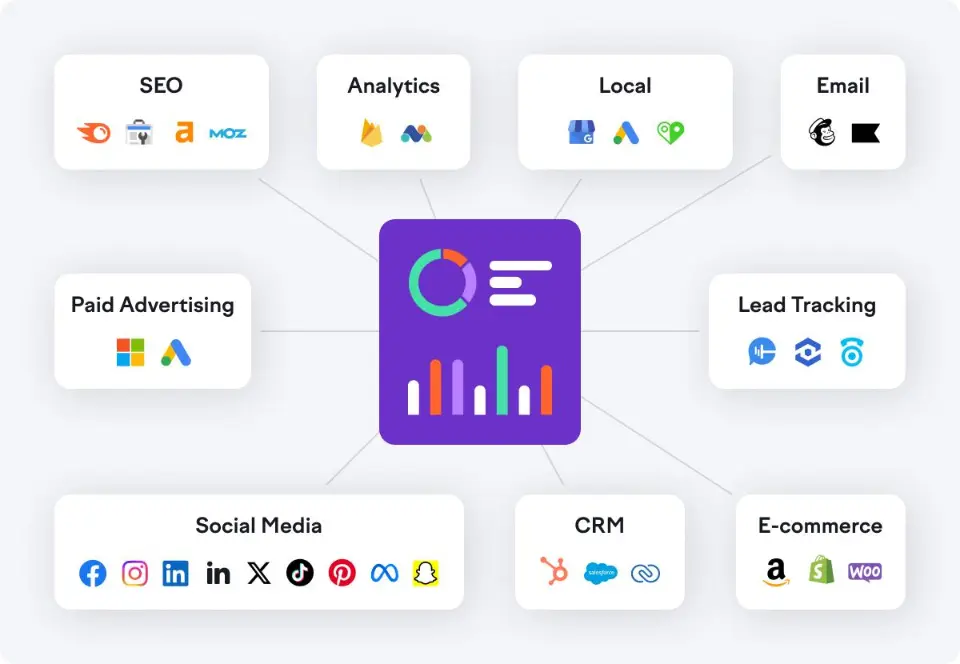
The growth of digital platforms introduced an entirely different approach to marketing. Earlier, businesses primarily depended on newspapers, television, outdoor advertisements, brochures and personal recommendations.
Digital marketing created a more measurable and targeted alternative. Businesses could now reach specific audiences, understand customer interests and evaluate the performance of their campaigns.
Several strategies became particularly relevant to Kerala’s changing marketplace.
Search Engine Optimisation (SEO) and Local SEO
Search engines changed how customers discover businesses.
Instead of relying entirely on recommendations, customers could search for products and services, compare providers and examine reviews before making decisions.
Search Engine Optimisation helps businesses improve their visibility in relevant search results. Local SEO takes this further by helping businesses appear for location-specific searches.
For example, a customer searching for an Ayurveda clinic in Kochi or a restaurant in Thiruvananthapuram can discover relevant businesses through Google Search and Maps.
Optimised websites, accurate business information, useful content and genuine customer reviews have therefore become important parts of local business visibility.
Social Media Marketing
Facebook, Instagram and YouTube introduced new ways for businesses to communicate with their audiences.
A retailer could showcase new products through Instagram Reels, a restaurant could publish food videos, and a tourism business could present destinations through visual storytelling.
Social media also made customer engagement more direct. Comments, messages, shares and user-generated content created opportunities for businesses to develop stronger customer relationships.
WhatsApp Business and Conversational Commerce
WhatsApp became more than a personal messaging application. Its business features introduced a convenient communication and sales channel.
Local retailers could share product catalogues, answer customer enquiries, announce offers and receive orders without investing in a separate application.
This was particularly useful for neighbourhood grocery stores, home-based businesses, agricultural sellers and small retailers.
Influencer and Video Marketing
The popularity of regional content creators introduced another marketing opportunity.
Kerala-based food bloggers, travel creators, lifestyle influencers and YouTubers began collaborating with brands to introduce products and services to relevant audiences.
For tourism businesses, restaurants and lifestyle brands, authentic visual content became a way to build awareness and influence purchasing decisions.
Google Ads, Meta Ads and Performance Marketing
Paid advertising introduced a more targeted approach to customer acquisition.
Google Ads allowed businesses to reach people actively searching for particular products and services. Meta Ads enabled businesses to target audiences based on interests, locations and other advertising signals.
Performance marketing developed this approach further by connecting advertising expenditure with measurable actions such as enquiries, calls, bookings and purchases.
With analytics and conversion tracking, businesses could evaluate campaign performance and make informed budget decisions.
E-commerce, UPI and Hyperlocal Commerce
Online marketplaces, digital catalogues, UPI payments and delivery applications simplified buying and selling.
Small businesses could reach customers beyond their immediate neighbourhoods, while agricultural and manufacturing businesses gained additional opportunities through online B2B platforms.
Together, these developments changed the relationship between businesses and consumers. Marketing was no longer limited to creating awareness; it became part of the entire customer journey.
6. Changing Consumer Behaviour and Modern Purchasing Habits
Kerala’s consumers have gradually developed a hybrid purchasing culture.
A customer might discover a product through Instagram, search for its reviews on Google, compare prices on an e-commerce platform and finally purchase it from a nearby store.
This makes online visibility and customer trust important even for businesses that primarily operate offline.
Festival seasons such as Onam, Vishu and Christmas also create significant commercial opportunities. Businesses increasingly use seasonal advertisements, promotional campaigns and social media content to connect with customers during these periods.
The Malayali diaspora adds another dimension. Kerala’s products, tourism experiences, food and cultural offerings can reach audiences beyond the state’s geographical boundaries.
7. Challenges and Opportunities for Kerala Businesses
Despite the growth of digital commerce, challenges remain.
Small retailers may lack the resources or knowledge required to manage multiple digital platforms. Rural connectivity and last-mile delivery can remain difficult in certain regions. Increasing competition also makes it harder for businesses to maintain visibility and healthy profit margins.
However, Kerala has several advantages: an educated population, strong community networks, distinctive agricultural products, tourism appeal and a large international diaspora.
Businesses can use these strengths through local-language marketing, search optimisation, social media, online advertising and improved customer experiences.
The opportunity is not simply to move every business online. It is to choose digital channels that support the actual needs of its customers.
8. The Future of Kerala’s Marketplace
Kerala’s next phase of market development will increasingly involve data-driven marketing, artificial intelligence, marketing automation, personalised customer experiences and advanced e-commerce solutions.
Businesses will have more opportunities to understand customer behaviour, automate routine communication and create relevant marketing campaigns.
At the same time, trust, cultural understanding and meaningful customer relationships will remain important.
The businesses that combine technology with a clear understanding of their local market will be better positioned to adapt to changing customer expectations.
Conclusion: From Traditional Trade to a Digitally Connected Kerala
Kerala’s market evolution reflects nearly seven decades of economic, social and technological change.
From agricultural bazaars and cooperative movements to organised retail, e-commerce and performance marketing, every stage has introduced new ways for businesses to connect with customers.
Digital marketing is now an important part of this transformation. SEO, social media, paid advertising, WhatsApp commerce and online platforms have expanded the opportunities available to businesses of different sizes.
Yet the foundation remains the same: understanding customers, delivering value and earning trust.
Kerala’s marketplace will continue to evolve. The businesses that recognise these changes and adapt their strategies thoughtfully will be better prepared for its next chapter.
CTA: Is Your Business Ready for Kerala’s Next Market Evolution?
The way customers discover and choose businesses has changed. A strong digital presence is no longer just an additional marketing channel; it is an important part of how modern businesses compete.
At ADTAUR, we help businesses build meaningful digital visibility through SEO, social media marketing, performance marketing, website development and strategic content.
Whether you are strengthening an existing business or building a new brand, the right digital strategy can help you reach the customers who matter.
Build your business for the next chapter of Kerala’s digital marketplace.